EV Chassis: The Complete Guide to Electric Vehicle Platforms
A deep dive into modern EV chassis technology, from skateboard platforms to battery integration.
Olympian Motors Team
Published Jan 15, 2025 • Updated Mar 1, 2025
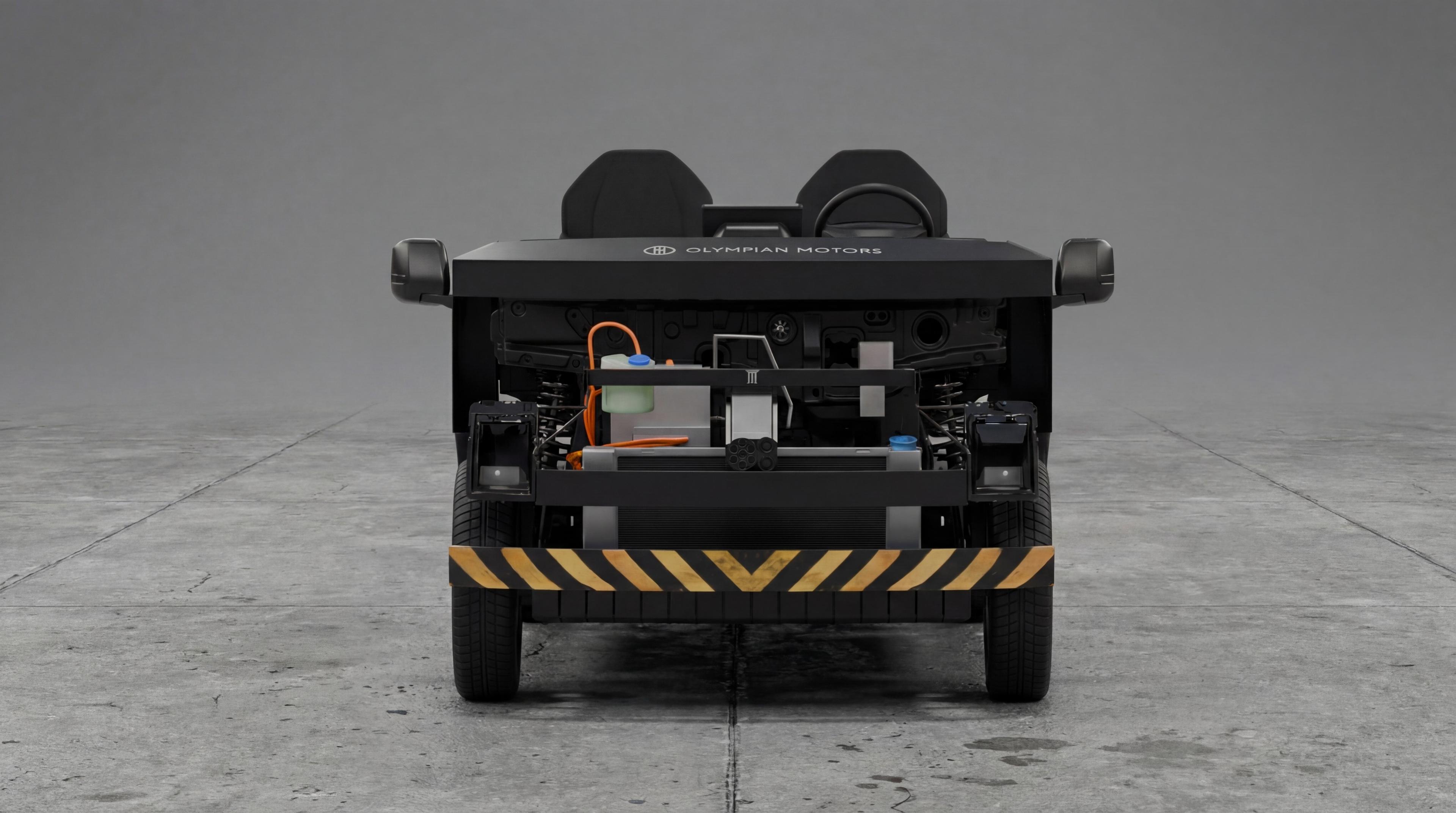
An EV chassis is the biggest shift in automotive design since we stopped using horses.
What Is an EV Chassis?
A complete rolling foundation with everything electric built in: battery, motor, cooling, controls, safety systems. Unlike traditional chassis that need an engine added, an EV chassis arrives functional and ready to drive.
What's Included
- 42-54 kWh battery pack in the floor
- Electric motor and single-speed transmission
- Power electronics and charging systems
- Thermal management for battery and motor
- Suspension, brakes, steering
- Safety systems and crash protection
- Vehicle computer and software
- Cockpit with display and HVAC
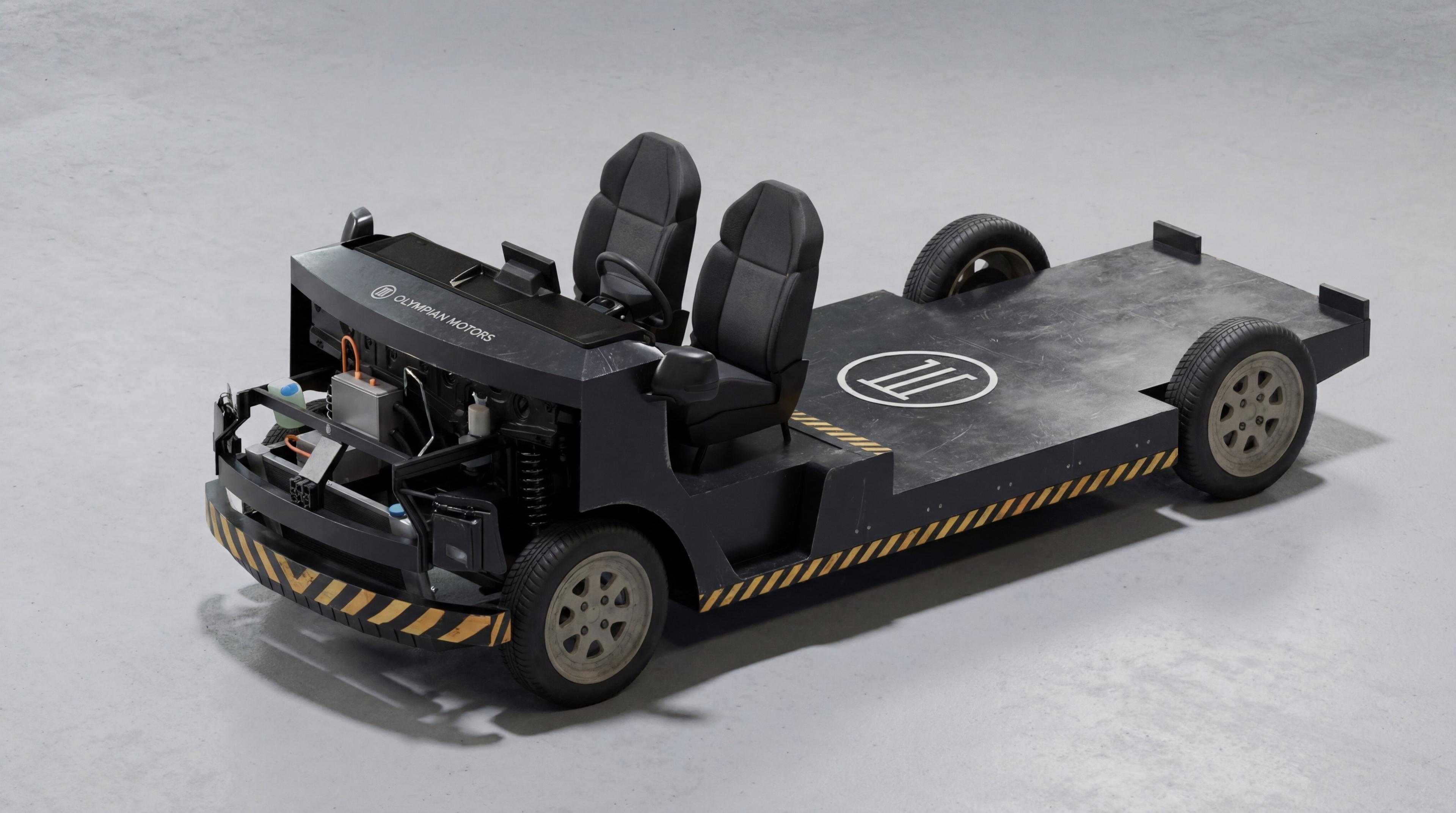
Why Skateboard Design Works
"Skateboard" describes the shape: flat battery deck with wheels at corners. This puts the heaviest component (battery) as low as possible.
Key Benefits
Low center of gravity: Battery inches off the ground means less body roll, better handling.
Perfect weight distribution: Batteries spread across entire floor for 50/50 balance front to rear.
Flat interior floor: No engine, no transmission tunnel, no driveshaft. Maximum interior space.
Battery System
The battery pack is structural. It's part of the chassis, not cargo. The enclosure carries loads and adds rigidity. This saves weight by eliminating redundant structure.
Inside the Pack
Thousands of lithium-ion cells grouped into modules. Battery Management System monitors every module for voltage, temp, and health. Liquid cooling keeps everything in the optimal 20-40°C range.
Motor Configuration
Olympus uses a single rear motor. 174 HP continuous. Permanent magnet motor for high efficiency. Single-speed reduction gear, no multi-speed transmission needed.
Why single-speed? Electric motors deliver full torque from zero RPM and maintain power to 15,000+ RPM. No shifting required.
Digital Controls
Drive-by-wire eliminates mechanical linkages. Steering and braking are electronic. This enables:
- Adjustable steering feel via software
- One-pedal driving with regen braking
- Traction control and torque vectoring
- Remote operation capability
Commercial Applications
Fleet Vehicles
Delivery companies mount different cargo bodies on the same electric platform. One powertrain across the fleet simplifies maintenance.
Custom Manufacturers
Small manufacturers building specialty vehicles use the chassis to avoid developing powertrains. Focus on body design and features.
Autonomous Development
Drive-by-wire and digital controls make the platform ideal for autonomous systems. Connect via CAN bus and control everything electronically.
Olympus Specs
174 HP
Continuous Power
42-54 kWh
Battery Capacity
155-255 mi
Range
3,550 lbs
Payload
Full Specifications
FAQs
How much does it cost to build with an EV chassis?▼
Building from scratch costs $500M-$2B and 4-5 years. Using a pre-engineered EV chassis reduces costs by 60-80% and cuts time to 12-18 months.
Why don't EVs need multi-speed transmissions?▼
Electric motors deliver full torque from 0 RPM to 15,000+ RPM. A single-speed gear handles all situations. Simpler, lighter, more reliable.
What's the advantage of skateboard design?▼
Low center of gravity, 50/50 weight distribution, and flat interior floor with no transmission tunnel.
Can it be used for autonomous vehicles?▼
Yes. Drive-by-wire controls make it ideal for autonomous systems. Connect via CAN bus and control everything electronically.
Summary
The Olympus EV Chassis is available now. Certified, tested, and ready for your vehicle design. Whether you're building fleet vehicles, custom vehicles, or autonomous platforms, the skateboard architecture gives you a proven foundation.
See the Olympus Platform in Action
Ready to Build on the Olympus EV Chassis?
The platform is certified, tested, and ready. Configure your chassis and start your electric vehicle project today.
Configure Your Platform