Electric Chassis: How Modern EVs Are Built
Why electric chassis design is different from gas cars, and why it matters.
Olympian Motors Team
Published Jan 20, 2025 • Updated Mar 1, 2025
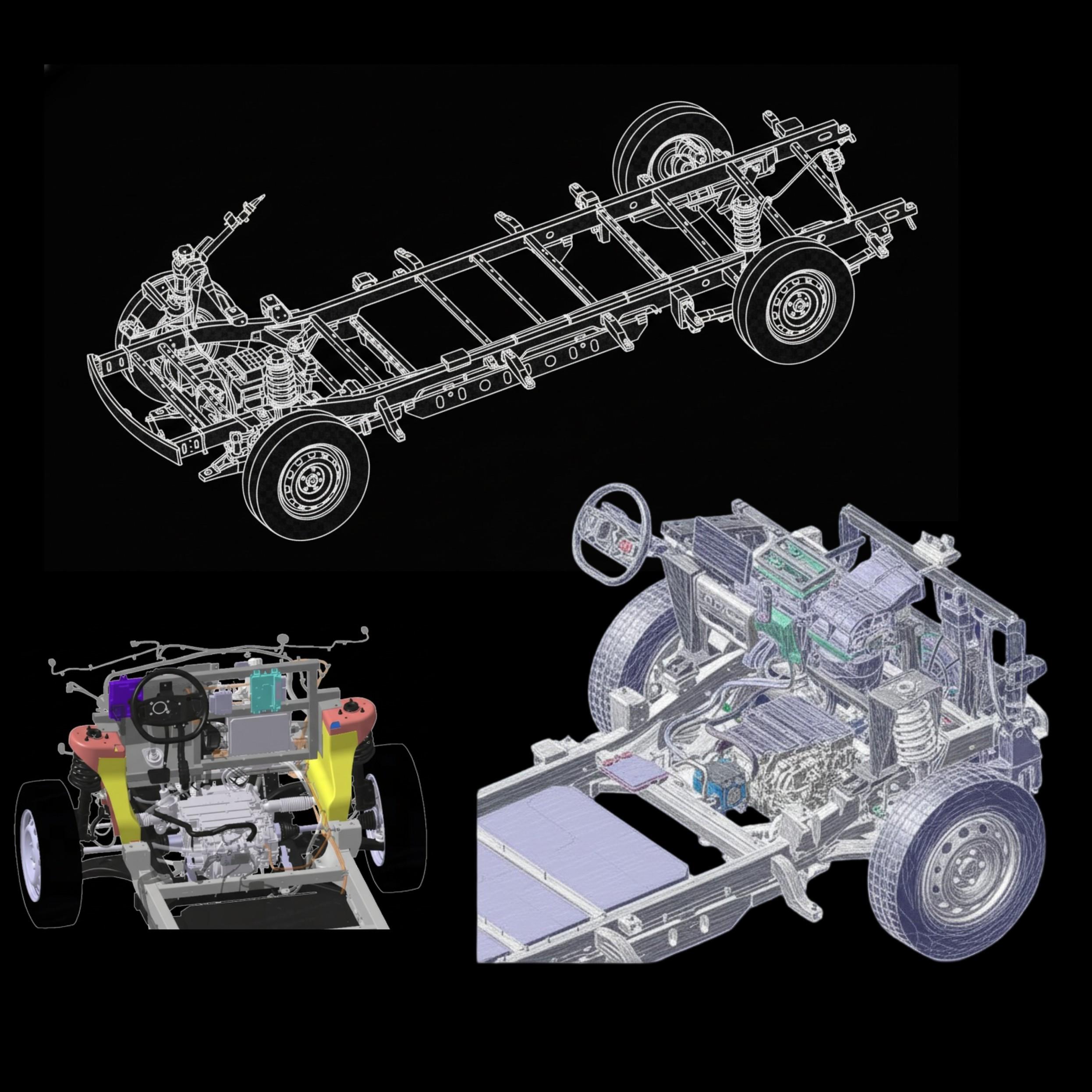
An electric chassis isn't just a gas chassis with batteries. It's a ground-up redesign of how vehicles are built.
Skateboard Architecture
Called "skateboard" because that's what it looks like: flat battery deck with wheels at the corners. Batteries in the floor. Motors at the axles. Everything as low as possible. This is the foundation of modern EV conversion technology.
Traditional cars stack components vertically: engine, transmission, driveshaft, differential. This raises the center of gravity and wastes interior space. Electric skateboards distribute weight horizontally across the floor. The Olympus Platform uses this exact architecture.
Why It Works Better
Lower center of gravity: Battery weight sits inches off the ground. Less body roll in corners. Can use softer suspension for comfort without sacrificing handling.
Better weight distribution: Spread batteries across the whole floor for near-perfect 50/50 balance. Gas cars with front engines are 60/40 at best.
Flat floor: No transmission tunnel or driveshaft eating interior space. Walk-through cabins in vans become possible.
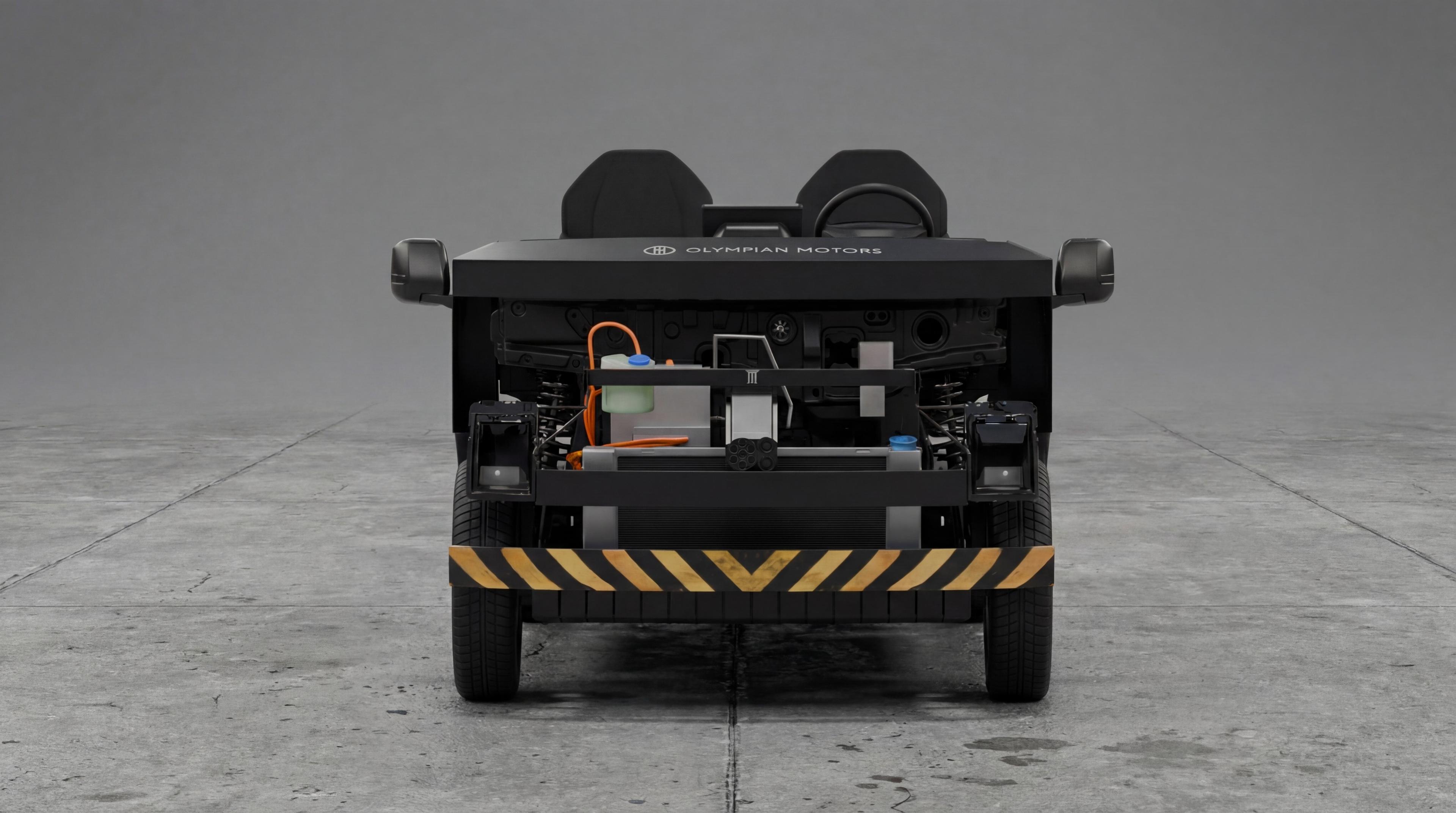
Battery Integration
The battery pack is structural, not cargo sitting in a box. The aluminum enclosure carries loads and adds rigidity to the chassis. This saves weight by eliminating redundant structure.
What's Inside
Thousands of individual lithium-ion cells grouped into modules. Each module has cooling channels and temperature sensors. Battery Management System monitors every module for voltage, temperature, and health.
Thermal Management
Liquid cooling keeps batteries in the 20-40°C sweet spot. Too hot degrades life. Too cold kills range. Coolant circulates through the pack, then flows to radiators up front.
In winter, the system reverses and uses motor waste heat to warm the battery before fast charging.
Motor and Drivetrain
Olympus uses a single rear motor: 174 HP continuous, 200+ HP peak. Permanent magnet motor for efficiency. Single-speed reduction gear. No transmission needed because electric motors deliver full torque from zero RPM.
No clutch, no shift solenoids, no torque converter. Just bearings and gears. 200,000+ mile service life.
Drive-by-Wire Controls
No mechanical linkages. Steering wheel inputs are electronic signals to actuators. Brake pedal is digital. This enables features impossible with cables and hydraulics:
- Adjustable steering weight via software
- One-pedal driving with aggressive regen
- Remote operation for autonomous applications
Olympus Specs
174 HP
Continuous Power
42-54 kWh
Battery Capacity
155-255 mi
Range
400V
System Voltage
Full Specifications
Why Modular Matters
One chassis platform, multiple body types. Change wheelbase, swap body tooling, manufacture entirely different vehicles. This enables low-volume production economically. See examples: classic car conversions, commercial fleets, and custom kit cars.
Developing a new EV from scratch: $500M-$2B and 4-5 years. Using a pre-engineered chassis: 60-80% cost reduction and 12-18 months to production.
Bottom Line
Electric chassis architecture returns automotive manufacturing to its roots. Specialized chassis builders make platforms, body designers make vehicles. This separation means faster development, lower costs, and more variety.
The Olympus Electric Chassis is available now. Pre-certified, tested, ready to build on.
Related Resources
- Complete EV Conversion Guide — How to use electric chassis for vehicle builds
- EV Conversion Kit Details — What's included in the Olympus platform
- Classic Car Electric Conversion — Applying chassis technology to vintage vehicles
- Olympus Platform Specifications — Technical details and ordering
See the Olympus Platform in Action
Ready to Build on the Olympus Electric Chassis?
The platform is certified, tested, and ready. Configure your chassis and start building today.
Configure Your Chassis