Building Functional Concept Vehicles
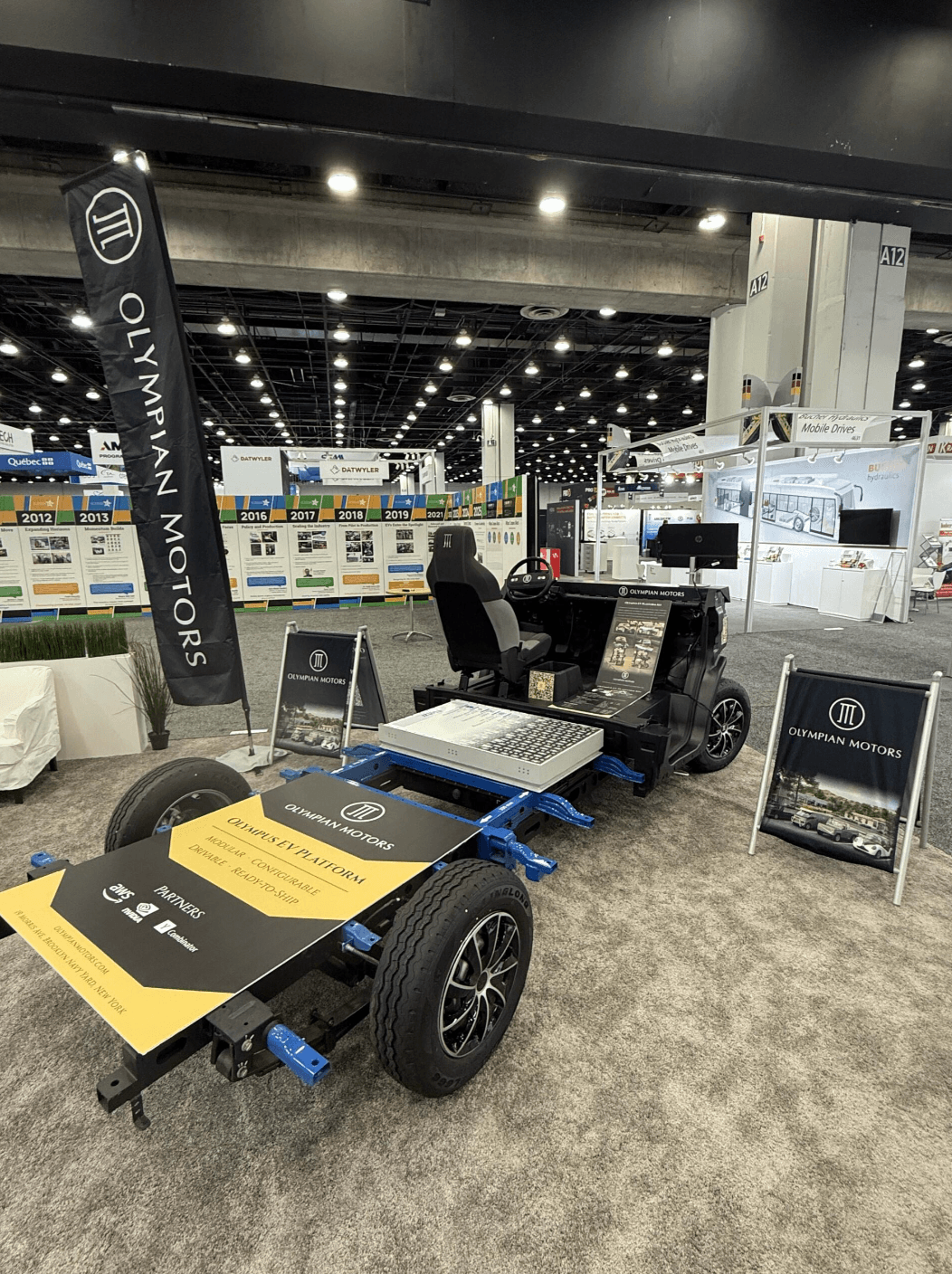
Technical overview: pre-integrated EV chassis for concept vehicle development.
DEVELOPMENT BLUEPRINT
Building a functional concept vehicle typically requires full powertrain development — battery management systems, motor controllers, vehicle dynamics software, and safety validation. This document outlines how a pre-integrated rolling chassis eliminates these dependencies.
Functional vs Static Concept Vehicles
Static concept vehicles — non-functional display models — limit validation to visual assessment only. Functional concepts enable dynamic testing: suspension geometry under load, thermal behavior during operation, NVH characteristics, and real-world ergonomics evaluation.
A drivable platform provides measurable data points: 0-60 acceleration curves, regenerative braking efficiency, weight distribution with body-in-white, and power consumption under various drive cycles. These metrics inform production feasibility studies.
130 kW
Peak motor output
72 kWh
Max battery capacity
3,550 lb
Body payload capacity
Platform Integration Points
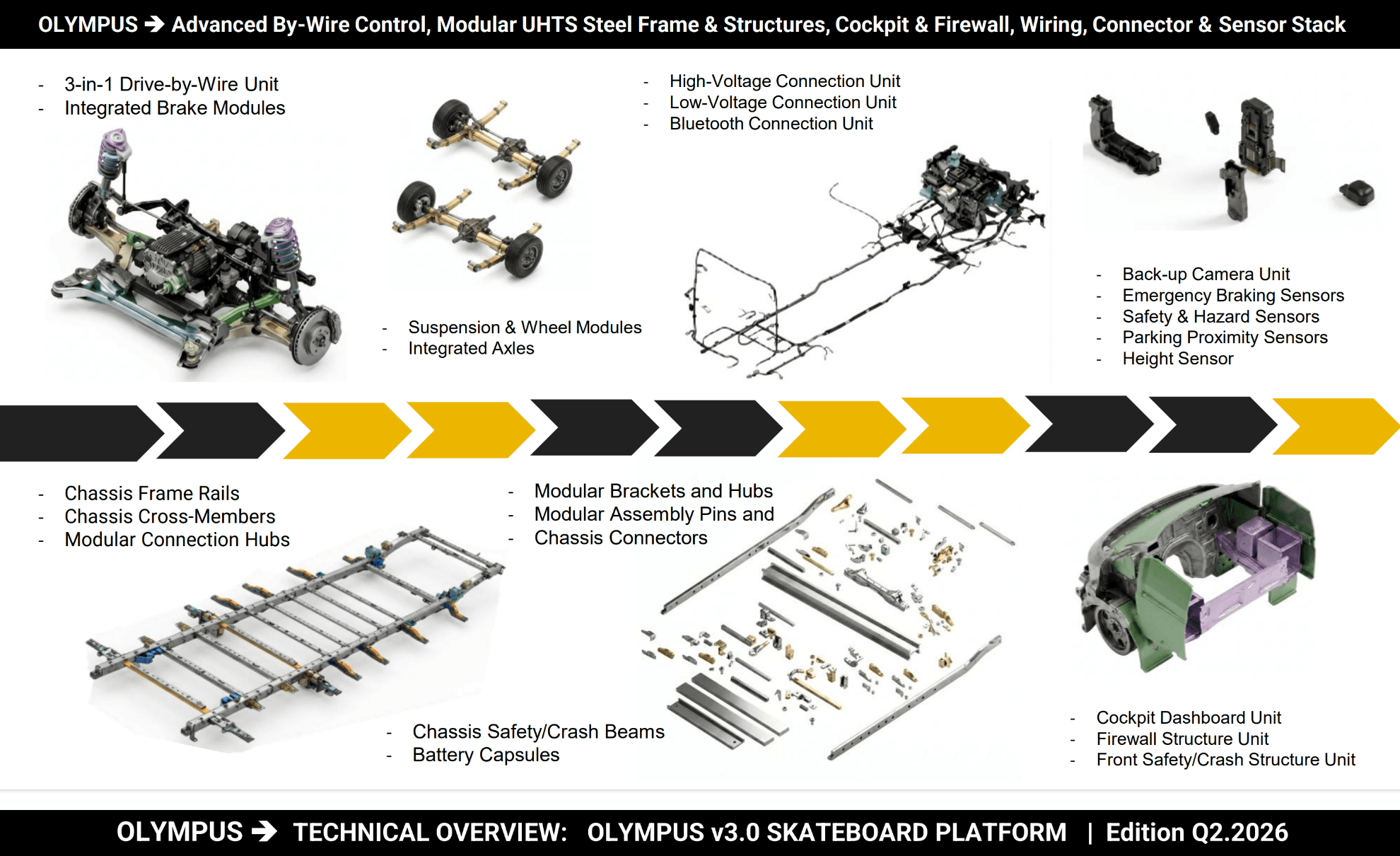
Key interfaces for body integration
CAN Bus Access
Vehicle data bus for custom HMI, telemetry logging, and third-party system integration
Power Distribution
12V auxiliary and high-voltage taps for lighting, HVAC, displays, and custom electronics
Mounting Points
Standard bolt patterns for body attachment; CAD files provided for integration modeling
Drive-by-Wire
Steer, throttle, and brake inputs via electronic interface; no mechanical linkages required
Traditional Development Constraints
Ground-up EV development requires parallel workstreams: high-voltage battery architecture, BMS calibration, inverter tuning, thermal management loops, CAN bus integration, and functional safety certification (ISO 26262). Timeline: 18-36 months minimum.
For concept vehicles with limited production intent, this engineering overhead is prohibitive. The result: most OEMs default to static mockups with simulated lighting and non-functional drivetrain components. Design validation becomes theoretical rather than empirical.
Pre-Integrated Rolling Chassis
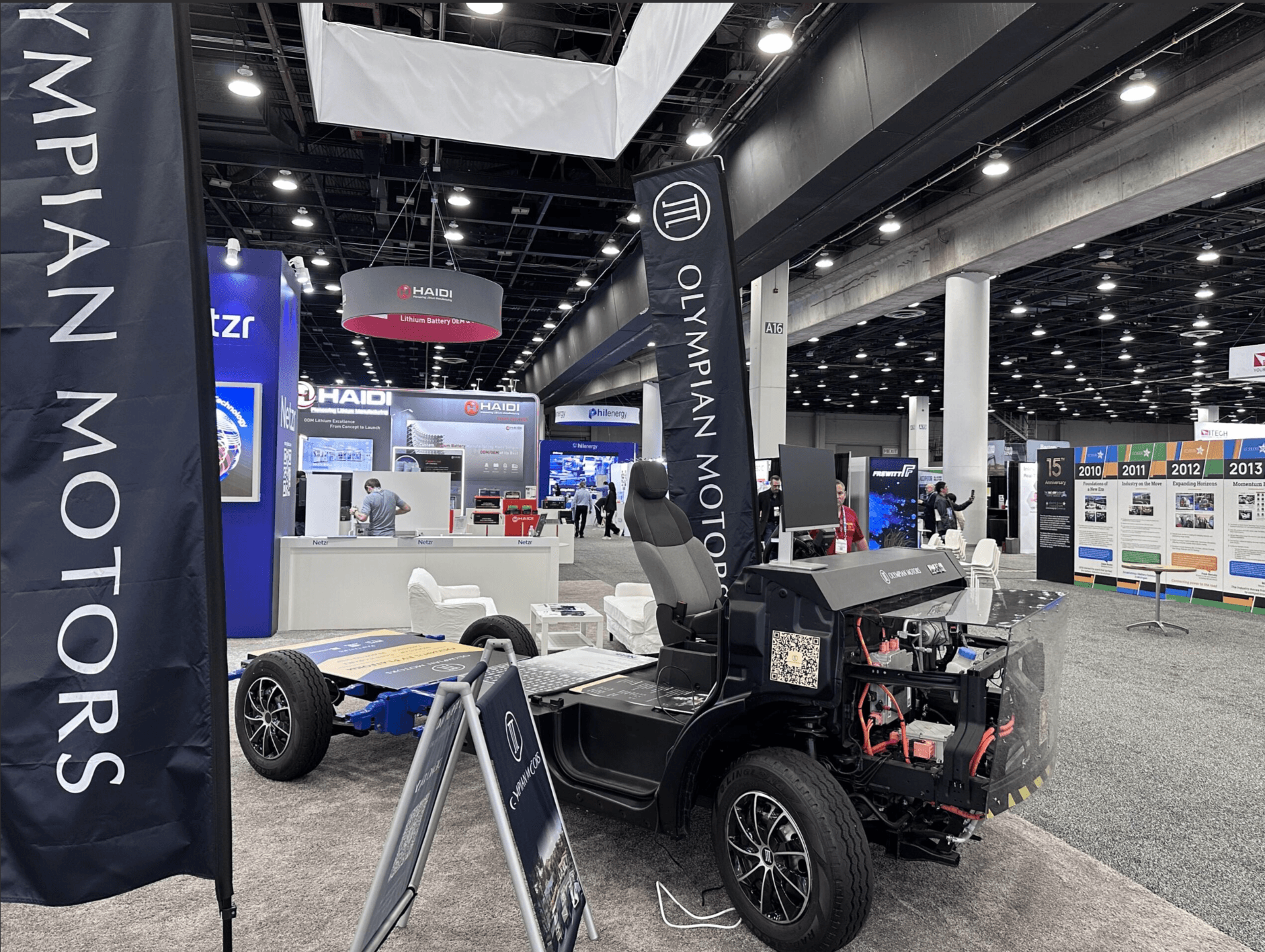
The Olympus platform ships as a validated, road-ready skateboard chassis. Battery pack, drive unit, power electronics, vehicle control unit, and drive-by-wire systems arrive pre-integrated and calibrated. Body mounting points accept custom superstructures via standard bolt patterns.
TECHNICAL SPECIFICATIONS
Drive Unit
130 kW / 174 HP, 121 mph top speed
Battery Options
42-72 kWh LFP, 150-255 mi range
Payload Capacity
3,550 lbs GVWR for body integration
Wheelbase
133-146 in adjustable, multiple configs
Ready to Get Started?
Talk to our team or visit our Irvine R&D Lab to see the platform in person.
Use Cases
OEM Concept Programs
Decouple body development from powertrain timelines. Test multiple body variants on a single validated platform without redundant EV engineering.
Design Studio Prototypes
Deliver functional vehicles to clients without in-house EV expertise. Platform handles propulsion; studio handles industrial design.
Film & Production Vehicles
Hero cars with actual driving capability for on-set use. Eliminates tow rigs and CGI for driving sequences. Repeatable performance for multiple takes.
Engineering Validation
Dynamic load testing, aerodynamic validation, thermal imaging under operation, and ergonomics assessment with actual vehicle motion.
Frequently Asked Questions
Stage display or fully drivable — what are the options?+
What body materials work with the platform?+
How quickly can a concept car be built?+
Can the concept later become a production vehicle?+
Can the platform handle multiple show appearances?+
How does the platform integrate with custom lighting and displays?+
What happens if something breaks during a show?+
Build Your Concept Car
Create a show vehicle that actually drives. Make your next reveal unforgettable with a concept that moves under its own power.